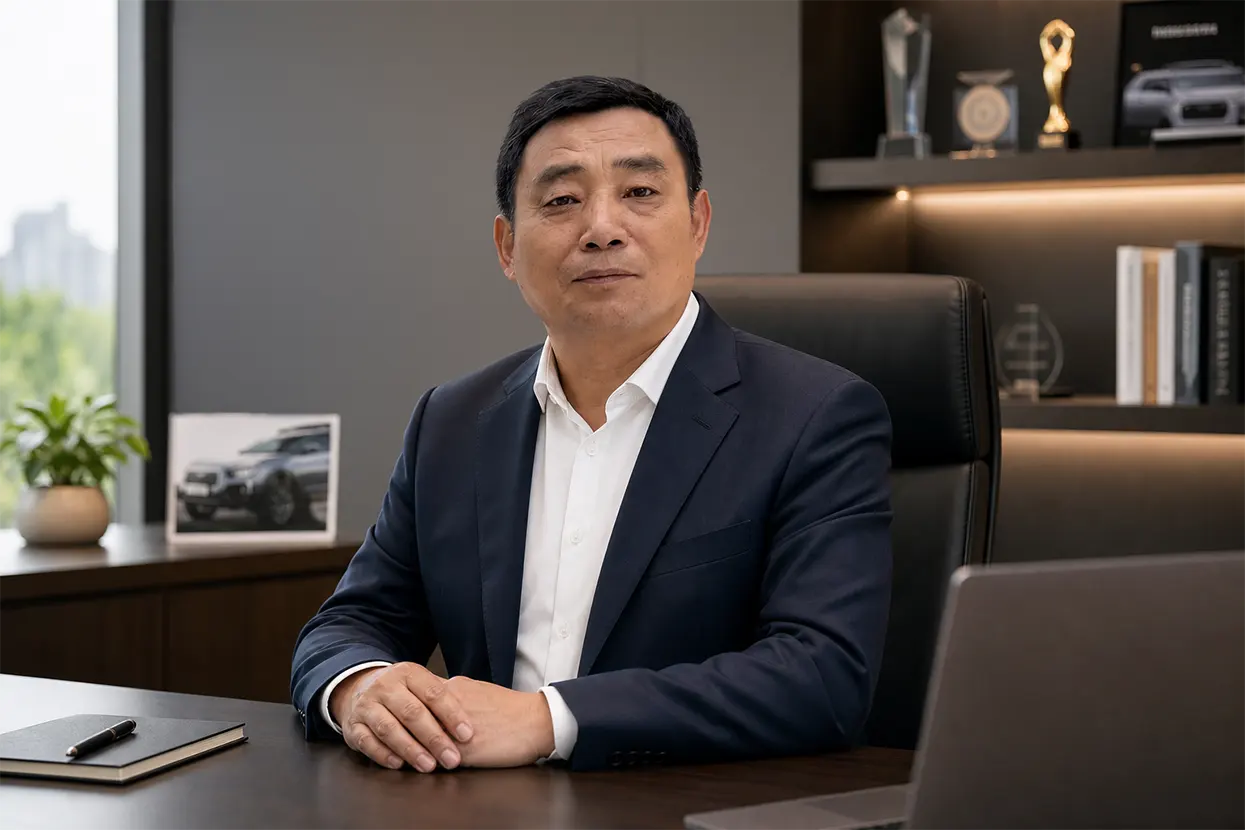
Corporate Culture: Better to Do Just Two Things and Be Number One in the World
In 2006, when Shen Zhenqi founded White in Longgang, Shenzhen, many of his peers chose the path of "large and comprehensive": producing cutting machines, rewinding machines, slitting machines, and even venturing into other automation equipment.
However, Shen Zhenqi made what seemed like a "conservative" decision:to minimize the variety of products and focus solely on cutting machines and rewinding machines.
"Human energy is limited, and so are corporate resources," he often tells his team. "Rather than achieving mediocre results in ten fields, it's better to excel in one."
This culture of "extreme specialization" has permeated White's nearly 20 years of development. The company did not blindly expand its product line but instead invested 8% of its annual sales into research and development, continuously refining its few core products. The results have proven this path successful:cutting machine sales are number one globally, and rewinding machine sales are also number one globally.
Shen Zhenqi summarizes it plainly: "Our goal is not to make many products, but to continuously improve and innovate the technology of these two products, increase production volume, optimize costs through quantification, and ultimately provide customers with the best cost-performance ratio."
Innovation: Not a Show of Skills in the Laboratory, but Answers in the Workshop
Many companies display innovation on their walls, while Shen Zhenqi places innovation in the customers' workshops.
"True innovation involves going into the customer's workshop, observing the problems they encounter daily, and then bringing those back to become research topics," he requires the R&D team to regularly visit end users—from tape factories in Vietnam to electronic material workshops in South Korea, from e-commerce warehouses in Yiwu to packaging factories in India.
A typical example is the industry-wide issue of "narrow strip misalignment." When traditional cutting machines cut narrow-width tape, the material tends to misalign, resulting in a high waste rate. Shen Zhenqi's team did not create solutions behind closed doors in a laboratory; instead, they observed, measured, and repeatedly tested on production lines in multiple factories. Ultimately, they achieved a breakthrough in the minimum cutting width to0.5mm, ensuring that narrow strips do not misalign or curl.
This technology was later applied to the F330S and F400 models, helping high-end clients such as electronic tape and medical dressing manufacturers reduce their waste rates from 2% to below 0.4%.
Innovation Rhythm: Avoid Leapfrog Development, but Pursue Continuous Micro-Innovation
Shen Zhenqi does not agree with the popular notion of "disruptive innovation." He advocates for a technology evolution strategy of "one step at a time."
"Do not attempt to leapfrog development all at once, but ensure continuous micro-innovation," he encourages engineers to solve one small problem each day—optimizing a knife holder structure, improving a segment of program logic, reducing a failure point.
The 237 core patents were accumulated in this manner. Each patent was not created just to add to the count but solved a real production pain point. In Shen Zhenqi's words: "Each patent is an answer to a customer's question."
Trust in Talent: Patents Are Not Just Mine
White currently has a professional technical team of over 150 people, with more than 30% being R&D personnel. Whenever discussing the company's technological achievements, Shen Zhenqi always credits the team.
"No matter how powerful I am, I cannot create 237 patents alone. Every piece of equipment and every technological breakthrough at White is the result of the wisdom of every engineer on the team."
He grants technical personnel ample autonomy in R&D, encouraging them to step out of the laboratory and into the customer site. There is an unwritten rule within the company:any engineer who identifies a pain point in a customer's factory can directly initiate R&D without needing layers of approval.
In Conclusion
"Selling equipment to over 70 countries is not luck; it is the result of nearly twenty years of focusing on one thing," says Shen Zhenqi.
In a restless business environment, White has carved out a unique path in the niche market of tape equipment through its culture of "extreme specialization" and innovation that "comes from the customer."
Better to do just two things and be number one globally than to do twenty things, each of which is mediocre.—— this may be the simplest answer to White's approach to innovation.